What Is a Digital Front Door and Why It Matters for Healthcare
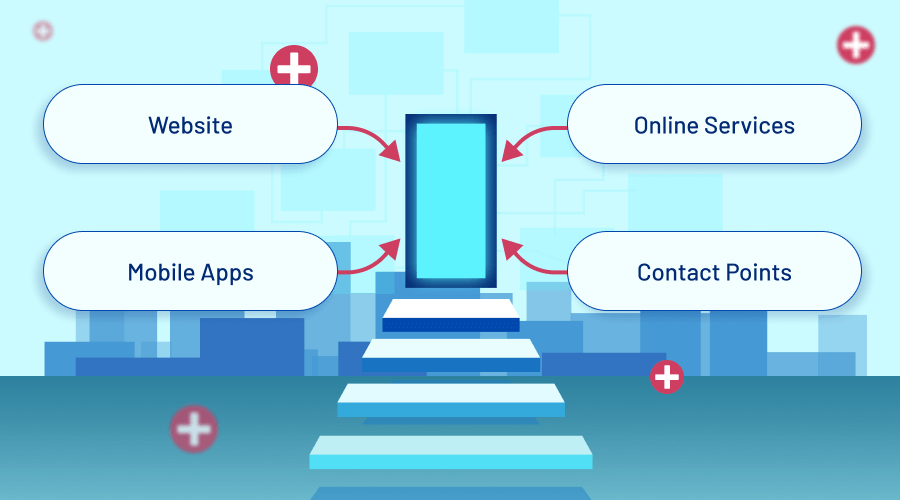
A digital front door refers to the online entry point or gateway that an organization provides for its customers or users. It’s essentially a metaphorical way of describing the first point of contact users have with a company or service in the digital realm. And as everyone knows, first impressions are the most valuable ones.
In healthcare, a digital front door is the way for patients to access a provider’s services, resources, and information. This concept has gained prominence with the increasing use of digital technologies in healthcare to improve patient engagement, care accessibility, and overall delivery.
And as such, the DFD strategy fundamentally changes how users consume healthcare services.
When patients first interact with a front door, they have an opportunity to benefit from one of many care channels offered by the provider by selecting the most suitable one for them. At the same time, they gain access to a multitude of other integrated DFD services, while still being engaged with a centralized network that a provider can easily keep track of.
This aspect of DFDs — omnichannel, yet unified service provision — is what makes them especially great for healthcare. Here are some key elements of any digital front door solution:
- Web Portal: This is often the primary component of a digital front door strategy. A well-designed website serves as the “front door” to a business or organization, providing information, services, and products to visitors.
- Mobile Apps: In the age of smartphones, many businesses also have mobile applications that serve as another entry point for users. These digital front door software apps offer convenience and accessibility for users.
- Online Services: This includes any digital services that a company offers, such as online shopping, billing, account management, and more. These services are accessible on the web.
- Contact Points: This can include chatbots, customer support forms, email addresses, or phone numbers prominently displayed on the website or app for users to reach out for assistance.
The goal of a front door in health services is to cohesively integrate all the services that can benefit the patient into one system, available via a single entry gateway.
By providing patients with convenient and easy-to-use digital tools, provider organizations aim to empower individuals to take an active role in cultivating their wellbeing, and ultimately improve health outcomes. In a value-based, patient-centric healthcare environment, therefore, maintaining a DFD is essential.
Learn what other tools you need to Engage Your Patients
Essential Digital Front Door Functionality
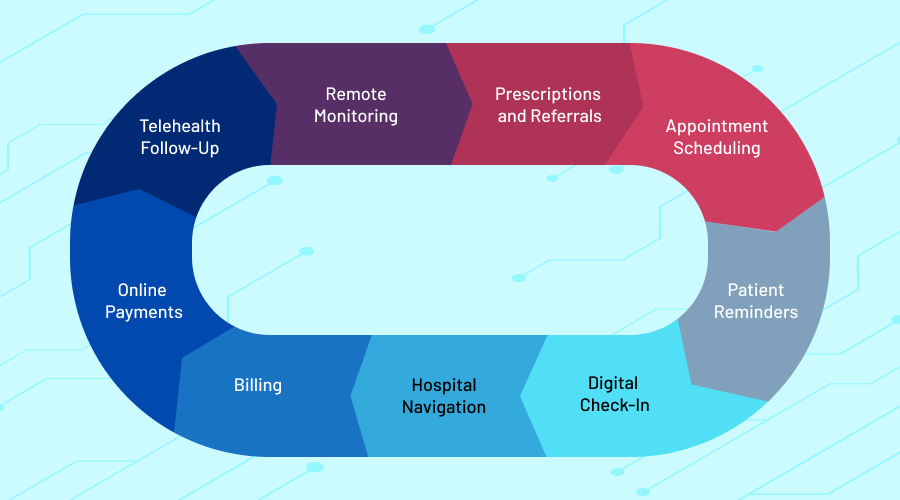
As a primary reception area for patients looking for health services, a digital front door should offer access to a wide range of services, information, and resources maintained by a provider organization, all as a part of an interoperable environment.
That is the reason why the components of a front door can vary depending on the specific provider. However, most digital front door solutions share some cornerstone characteristics.
Patient Portal
A secure online platform where patients can access their health records, including lab results, medications, and visit summaries. Often functioning as a patient-facing webpage, it features appointment scheduling, cancellations, and rescheduling options, as well as prescription and medication plan management.
Some of the qualities to make a patient portal successful are secure authentication methods, encryption, and data privacy protocols. When your customers know that the sensitive information they share is protected, they will trust your services much more.
Another important consideration here is UI and accessibility. Such features as text-to-speech, screen readers, and adjustable font sizes are essential for a user-friendly interface, oriented to a diverse patient population with special needs and health-based requirements.
Digital Consent Management
For doctor visits and clinical trials, a growing number of healthcare providers are embracing digital consent management. It’s an important DFD component that allows patients to sign HIPAA agreements, financial policies, and other forms electronically, minimizing the need for paper and clipboards.
Once those consents are signed, they can be automatically sent to a provider organization’s hospital management system or EHR. That means staff can spend less time on data entry and more time focused on meeting patients’ needs.
Facilitate your staff’s workflows by leveraging Robotic Process Automation
The recent years have seen the rise of telemedicine services that utilize the latest communication technologies to bridge the distance that separates medical providers and patients.
This made healthcare services accessible to everyone via virtual appointments, calls, and follow-ups. Video visits, online chat, or phone consultations with healthcare professionals are now a commonplace thing and hence, something that should be integrated with a company’s virtual front door.
Remote Monitoring
For patients with chronic conditions or those needing continuous observation, the digital front door might include connections to medical IoT and remote monitoring systems. This allows healthcare providers to track patient data and intervene when necessary.
Remote monitoring via wearable health technology or smart home sensors enables healthcare services to collect and analyze data in real-time, fostering informed decision-making. This allows providers to proactively engage with patients and caregivers for early disease detection and timely intervention.
Read more about our take on developing Remote Monitoring Software for Urology
Digital Screening and Triage
Due to implementing a front door, health screening of patients during intake is another excellent feature that gives providers an opportunity to boost patient engagement and quality of care. With self-reported data about patients’ symptoms and pre-existing conditions, it is also easier to point them towards appropriate steps on their healthcare journey.
This is how we built a Medical Reference App
Appointment Management Systems
As an expected feature of any patient-centric digital front door solution, appointment management systems are a great way to enhance patient experience.
Here are a few examples: booking platforms aligned with provider calendars, automated reminders via email, text messages, and app notifications, or waitlist options for earlier appointment availability. All of these make sure that a patient receives appropriate care at the time when it’s needed most.
See how we created a dental care Appointment Scheduling System
On-Site Navigation
Whenever the patient needs to visit a hospital or another healthcare organization, they are often faced with navigational complexity. Different departments, facilities, and lobbies make receiving health services an intimidating task to many vulnerable patient groups.
Providing digital maps, information kiosks, or even navigation apps as a part of your front door will make the hospital visit a process that’s more intuitive for the patient, saving time and reducing the number of no-shows. It is also bound to improve your overall hospital management and increase its profitability.
Find out how we’ve optimized an Indoor Tracking System for Hospitals
Health Education and Resources
A digital front door makes health management more accessible to patients through education. Informational materials that can be offered by a provider may include articles, videos, and resources on various health topics. They can also incorporate tools for tracking health metrics, such as weight, blood pressure, and exercise routines.
Another offering that is now gaining popularity as downloadable content is a selection of wellness programs, diet plans, and exercise regimens tailored to individual needs.
Mobile Applications
In our increasingly digitized society, the mobile app market continues to expand year to year. In 2025 alone, Google Play was responsible for 104.6 billion app downloads, and iOS had 36.6 billion.
So it’s no surprise that a successful front door system will need to be supported by mobile applications that can be used by patients on the go and unite all the functionalities of the DFD with a user-friendly, device-optimized interface. They can provide users with push notifications for reminders, updates, and health tips, and integrate with wearables for health data tracking.
Here’s why it’s a great idea to build Custom Medical Apps
Billing and Finances
Payment collection and processing is one of the most challenging aspects of healthcare for both providers and patients. A front door introduces integrated online billing and payment options for health services that include estimates of costs for procedures, treatments, and appointments.
In collaboration with insurers, providers can also grant patients access to insurance information, claims status, and coverage details as a part of a unified and secure digital environment.
Care Coordination and Referrals
As a part of a centrally managed front door system, providers may choose to invest in tools for coordinating care between multiple healthcare providers and specialists. These can include referral management databases for scheduling appointments with specialists or for diagnostic tests, as well as care plans and treatment summaries shared securely with patients.
Fresh digital solutions are there to coordinate Long-Term Care Bookings
Patient Feedback Tools
In an effort to improve healthcare delivery, health service providers can use their DFD system to collect surveys and feedback forms from patients that provide input on their experiences. On the patients’ side, ratings of healthcare providers and services based on reviews help to inform their decisions about the type of care they need.
Moreover, DFD solutions streamline the recruitment process for clinical trials, offering potential participants easy-to-use interfaces to learn about studies, express interest, and provide necessary information.
The Benefits of Digital Front Door for You and Your Patients
By thinking about the needs of the patients and their own business goals, organizations can successfully implement a digital door that enhances patient engagement, improves access to care, and ultimately delivers better health outcomes. These and more benefits of DFD solutions can be found below.
|
For Patients
|
For Providers
|
- Convenience and Accessibility
- Consolidated Information
- Ease of Appointment Scheduling
- Improved Communication with Providers
- Active Participation in Healthcare
- Privacy and Security of Health Information
- Better Disease Management
- Enhanced Satisfaction
|
- Improved Workflow and Operations
- Cost Savings
- Better Care Coordination
- Data-Driven Insights
- Compliance and Security
- Patient Retention and Loyalty
- Promotion of Preventive Care
- Adaptability and Innovation
|
For Improved Patient Experience
Convenience and Accessibility
Patients can access healthcare services and information anytime, anywhere, using their preferred devices such as smartphones, tablets, or computers.
No need to wait on hold for phone calls or visit a healthcare facility in person for routine tasks like appointment scheduling or prescription refills.
Consolidated Information
Patients can view their medical records, lab results, medications, and treatment plans securely online.
Access to educational resources, health articles, and videos empowers patients to learn about their conditions and make informed decisions about their health.
Ease of Appointment Scheduling
Online appointment scheduling allows patients to choose convenient time slots based on their availability and preferences.
The ability to schedule, reschedule, or cancel appointments with a few clicks reduces wait times and administrative hassles.
Improved Communication with Providers
Secure messaging systems enable patients to ask questions, seek clarification, and discuss concerns with their healthcare team.
Patients can receive reminders, notifications, and updates about appointments, medications, and health screenings.
Active Participation
Patients are encouraged to actively participate in their healthcare by tracking health metrics, setting goals, and monitoring progress.
Wellness programs, diet plans, and exercise regimens tailored to individual needs promote healthier lifestyles and disease prevention.
Privacy and Security of Health Information
Patient portals and digital platforms ensure the confidentiality and security of sensitive health data.
Patients have control over who can access their health information and can review permissions and consent settings.
Better Disease Management
Remote monitoring devices and wearable technology allow patients with chronic conditions to track vital signs and health metrics from home
Healthcare providers can remotely monitor patient progress and intervene when necessary, reducing hospitalizations and complications. Identity-based care means a patient’s experience doesn’t begin with a health crisis.
Enhanced Satisfaction
A user-friendly, digital experience leads to increased patient satisfaction and loyalty to healthcare providers.
Patients feel more engaged in their care and more connected to their healthcare team, leading to improved health outcomes.
For Efficient Service Delivery
Improved Workflow and Operations
Digital front door solutions automate many administrative tasks, such as appointment reminders, scheduling, and prescription requests.
Healthcare providers can optimize their workflows, reduce paperwork, and improve overall efficiency.
Integration with electronic health records ensures seamless data flow and eliminates the need for manual data entry. With less time spent on routine tasks, there’s less likelihood of personnel burnout.
Cost Savings
Reduced administrative overhead and paperwork lead to cost savings for healthcare organizations.
Telemedicine and virtual care options can lower healthcare delivery costs by reducing the need for in-person visits and hospital readmissions.
Better Care Coordination
DFDs facilitate communication and collaboration among healthcare providers, specialists, and care teams.
Care plans, treatment summaries, and test results can be easily shared and accessed by authorized providers, improving care coordination and continuity.
Data-Driven Insights
By collecting and analyzing patient data through digital platforms, healthcare providers gain valuable insights into patient populations, trends, and outcomes.
This data can be used to personalize care, identify areas for improvement, and implement preventive health measures.
Compliance and Security
Front door systems are designed with robust security measures to protect patient data and ensure compliance with healthcare regulations (e.g., HIPAA in the United States).
With these automated measures in place, providers don’t have to worry about unexpected legal problems.
Patient Retention and Loyalty
Providing a seamless, user-friendly digital experience can increase patient satisfaction and loyalty.
Patients are more likely to continue seeking care from providers who offer convenient digital services and responsive communication.
Promotion of Preventive Care
DFD services can deliver targeted health education, wellness programs, and preventive care reminders to patients.
With patients empowered to make healthier lifestyle choices and undergo regular screenings, providers have a higher success rate for early detection and prevention of diseases.
Adaptability and Innovation
Providers can continuously evolve their offerings to incorporate new technologies and meet changing patient needs.
Adoption of innovative tools such as wearable devices, remote monitoring, and AI-driven analytics can further improve patient outcomes.
In summary, a DFD provides patients with convenient, accessible, and personalized tools and resources to actively engage in their health and wellness journey. It improves communication with providers, reduces wait times, promotes preventive care, and ultimately leads to better patient satisfaction and health outcomes.
At the same time, it offers an equal number of benefits to health service providers. They include better patient loyalty, streamlined operations, reduced costs, efficient care coordination, and more. And as a global result, it fosters a culture of innovation and patient-centered care.
Top-5 Must-Knows about Digital Front Door Strategy

Creating a DFD in healthcare involves careful planning, collaboration across various departments, and consideration of patient needs and preferences. Here are the questions to ask if you want to implement a successful digital front door strategy.
1. What Are My First Steps to Develop a DFD?
— Access needs and goals.
The sooner you identify the specific needs and goals of your healthcare organization and conduct a thorough assessment of patient pain points, the sooner you can tailor the DFD’s features and functionalities.
To do that, determine what services and features you want to offer through the front door using current analytics tools and techniques.
First, consider patient demographics, preferences, and technological literacy to improve their digital experience.
Then, brainstorm common tasks patients want to accomplish online, such as appointment scheduling, viewing test results, requesting prescription refills, and communicating with providers. Consolidate patient data from various sources to provide a comprehensive view of their health information.
As an option, single sign-on (SSO) capabilities can simplify the patient login and navigation process, providing a unified experience across the DFD elements.
After that, design the virtual door with the patient experience in mind. Ensure it is intuitive, user-friendly, and accessible across different devices (e.g., desktops, tablets, smartphones). Personalize the user experience by allowing patients to customize preferences, such as language settings and notifications, and interact with virtual assistants or chatbots.
Make your DFD solution conversational with Generative AI Services
Also, don’t forget about patient feedback. Conduct usability testing with patients to gather their responses about the design, navigation, and functionality of your front door. Use surveys, focus groups, and analytics to gather insights into usage patterns, satisfaction levels, and areas for improvement.
2. Should I Start with a Website or a Mobile App?
— Create a patient portal first.
Based on your business model, choosing a reliable and secure patient portal or digital platform that meets your organization’s requirements may be the right way towards a strong DFD foundation.
To make it more recognizable, customize it to align with your organization’s branding, workflows, and patient communication protocols. Following that, you will need to ensure compatibility with existing electronic health record (EHR) systems and other apps and solutions you have in store.
Linking your apps to the main portal and each other is a surefire way to add convenience and accessibility. Allow patients to seamlessly move from one application to another as they are scheduling appointments, filling out forms, and paying bills for an easy-to-follow journey.
3. Do I Need to Introduce All the Features at Once?
— No, develop a roadmap instead.
It always takes a village, so involve key stakeholders, including clinicians, administrators, IT staff, and patient representatives, in the planning and decision-making process. Make sure that everyone’s on board to create a detailed implementation plan with clear milestones, responsibilities, and timelines.
Prioritize features based on urgency and feasibility, considering phased rollouts if necessary. Start with core functionalities that address immediate patient needs, such as appointment scheduling and access to health records.
Gradually introduce additional features, such as telemedicine services, secure messaging, and health education resources, based on feedback and adoption rates. Also, think about such cutting-edge capabilities as AI-powered personal recommendations or virtual assistants to facilitate the use of your DFD even more.
Conduct a soft launch or build an MVP app to test functionality and gather feedback from users. After that, you can reformulate your roadmap to include further developments and improvements.
4. What Do My Patients Need to Know About the Digital Front Door?
— They have to be well-informed about its benefits.
When launching a DFD strategy, you can never have too much patient interaction. Communicate clearly with patients about all the measures and features in place to build trust and confidence. Use various channels such as email, social media, waiting room displays, and patient education materials to accomplish that.
Highlight the convenience, accessibility, and benefits of using the digital front door for managing healthcare needs. To do that, establish a comprehensive marketing and communication strategy, whose goal is to raise awareness and promote the digital front door to patients. Encourage providers to do that as well, during appointments and through educational materials.
After the initial onboarding stage, make an effort to offer resources, user guides, and FAQs for patients to familiarize themselves with the features of the front door. Develop educational materials, tutorials, and Q&A documents to help patients learn how to use these features. As an extra mile, give learning sessions or workshops for patients to raise their level of comfort while interacting with your DFD.
5. How Do I Improve My Digital Front Door?
— Monitor, evaluate, and iterate.
We cannot stress enough just how important it is to continuously monitor DFD usage.
One way is to use analytics tools to track key performance indicators (KPIs) such as user engagement, adoption rates, appointment bookings, and patient outcomes. This will allow you to identify areas for improvement and refine the digital front door based on user insights.
Learn more on how to implement Data Analytics in Healthcare
You can implement other mechanisms, like generative AI for healthcare, to collect feedback from patients, providers, and staff on their experience with the digital front door. Monitor trends and patterns in patient behavior to identify areas of high usage and potential needs for improvement.
Then, leverage data insights to make informed decisions and optimize the DFD for better patient outcomes. Make the updates and enhancements regular to meet evolving patient needs and technological advancements.
What’s Next?
After answering these questions, medical organizations can create a front door that is reliable, scalable and boasts a well-planned and interoperable selection of features. The goal is to give patients a custom healthcare software solution that meets their diverse needs while enhancing the efficiency and effectiveness of healthcare delivery.
Velvetech professionals will work together with you to build a robust digital front door solution that is suited to your business needs and follows best industry practices. Contact us today to start your journey toward DFD.